Raw rasterised performance and value
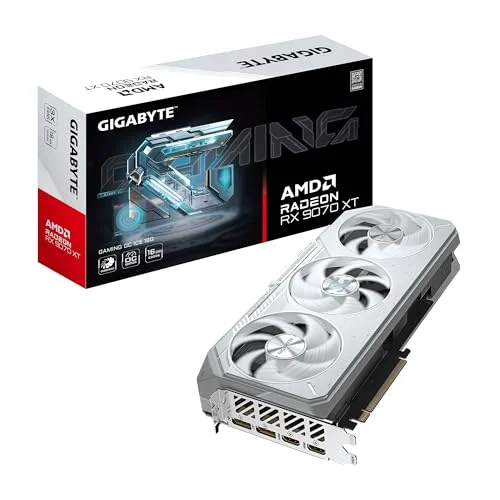
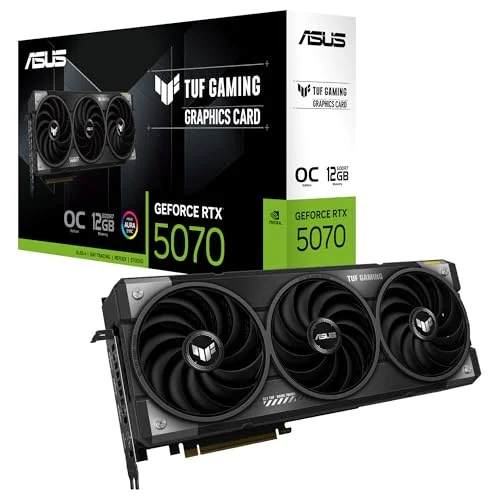
Rasterisation is the traditional way games are drawn, and it is where most of your frames come from in most games. Here AMD currently has the edge on value. In our six-game suite at 1440p ultra, the Radeon RX 9070 XT averaged 129 fps against the similarly priced GeForce RTX 5070's 118 fps, around 9% faster, and it carries a larger 16GB buffer to the Nvidia card's 12GB. If you mostly play fast-paced or competitive games without ray tracing, AMD gives you more frames and more memory for the money. That frames-per-pound advantage is the single strongest argument for buying Radeon in 2026.
The picture is the same lower down and higher up the range, broadly: AMD tends to win on raw raster and VRAM per pound, while Nvidia leans on its feature set to justify the price. So if your decision is purely "most frames for my budget in normal games", Radeon is usually the answer. The case for Nvidia is built on the things raster alone does not measure, which is where the rest of this guide focuses.
Ray tracing: Nvidia's clearest lead
Ray tracing simulates how light actually behaves, producing realistic reflections, shadows and global illumination, and it is the most demanding thing you can ask a graphics card to do. This is Nvidia's strongest ground. In our heaviest path-traced scene, the Nvidia cards held noticeably higher frame rates than the comparable Radeon card; the RTX 5070 Ti in particular offered the best ray-tracing performance per pound in our whole group. AMD's RDNA 4 has improved ray tracing significantly over previous Radeon generations and is perfectly playable with it on, but it still gives up frames to Nvidia when ray tracing is pushed hard.
So if path-traced lighting in the latest blockbuster games is central to how you play, Nvidia is the safer bet. If you rarely turn ray tracing on, or play mostly competitive games where it is off anyway, this lead matters much less and AMD's raster advantage comes back to the fore. Be honest with yourself about how often you actually use ray tracing before you let it decide the purchase.
DLSS versus FSR: the gap has closed
Upscaling renders the game at a lower resolution and reconstructs it to look sharp, recovering a lot of performance, and it is now central to high-end gaming. Nvidia's DLSS 4 with multi-frame generation is still the best in class for image quality and the frames it adds. But the big story of this generation is AMD's FSR 4, which has finally closed most of the gap. Earlier FSR versions shimmered and smeared in motion; in our testing FSR 4 produced a clean, stable image at 1440p, close enough to DLSS that most players would not notice the difference in normal play.
That change matters because weak upscaling used to be a real reason to avoid Radeon. It no longer is. DLSS retains a slight edge, especially at lower input resolutions, so if you intend to lean heavily on upscaling at 4K, Nvidia is marginally ahead. But the difference is now small enough that it should not be the only reason to choose a brand. Both technologies are good enough that you can buy either with confidence and get an excellent upscaled image.
Power draw and the wider feature set
Two more factors lean slightly Nvidia's way. On power, the comparable Nvidia cards were a little more efficient in our testing: the RTX 5070 drew 250 W to the RX 9070 XT's 304 W for similar 1440p performance, which made it quieter and cooler too. If power draw, heat and noise are priorities, perhaps in a small case, Nvidia has the edge. On the wider feature set, Nvidia's NVENC encoder is still preferred for streaming and video work, and its software ecosystem is more mature, though AMD has narrowed both gaps. None of these is decisive on its own, but together they form the case for paying a little more for GeForce.
Pulling it together: AMD wins on raw raster frames per pound and VRAM, while Nvidia wins on ray tracing, the best upscaling, efficiency and the broader feature set. Neither is a wrong choice in 2026, which is the healthiest the market has been in years. Decide by how you actually play, not by brand loyalty.