Why 1440p is the sweet spot in 2026
1440p, or 2560 by 1440, sits in the goldilocks zone for PC gaming. It carries roughly 78% more pixels than 1080p, so the image is noticeably sharper and more detailed, but it asks far less of the graphics card than 4K's four-times-1080p pixel count. That balance means a mid-range card can drive 1440p at a high, smooth frame rate, which is exactly what a 144Hz or 165Hz monitor is built to show. For most players upgrading from an older PC, a 1440p high-refresh setup is the most satisfying step you can take, and it is where the best value in the whole market currently sits.
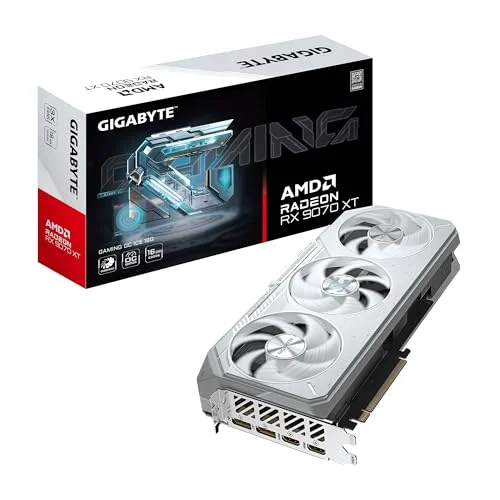
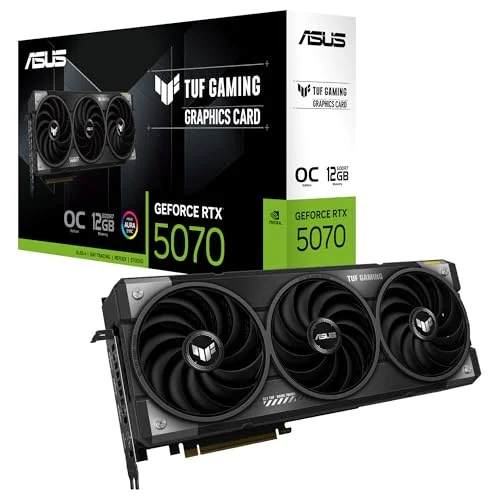
The two cards we recommend for it, the Asus RTX 5070 and the Gigabyte RX 9070 XT, both average well over 100 fps at 1440p ultra in our testing, so a high-refresh monitor genuinely pays off with either. The cards below them in our group, the RTX 5060 Ti and RTX 5060, are 1080p-first cards that drop below 60 fps in demanding 1440p games, and the cards above, the RTX 5070 Ti and RTX 5080, are overkill at 1440p and better saved for 4K. For 1440p specifically, these two are the rational picks.
RTX 5070 versus RX 9070 XT: the real choice
These two cards cost roughly the same and trade blows, so the decision is genuinely about what you play. In our six-game suite at 1440p ultra, the RX 9070 XT averaged 129 fps and the RTX 5070 118 fps, so the AMD card is around 9% faster in pure rasterised performance and carries a larger 16GB buffer against the Nvidia card's 12GB. If you mostly play fast-paced or competitive games without ray tracing and want the most frames for your money, the RX 9070 XT is the pick.
The RTX 5070 wins the ground that does not show up in a raw average. It pulls ahead with ray tracing enabled, it has the stronger upscaler in DLSS 4 with frame generation, and it is more efficient, drawing 250 W against the AMD card's 304 W, which makes it quieter and cooler at 66 degrees C and 31 dBA versus 68 degrees C and 34 dBA. It is also the more compact card at 227 mm, where the Gigabyte RX 9070 XT is a large 330 mm board. So the simple rule is: pick the RX 9070 XT for raw raster frames and value, and the RTX 5070 for ray tracing, efficiency, quietness and a smaller build. AMD's FSR 4 has closed the upscaling gap enough that neither is a wrong answer. Our Nvidia vs AMD guide covers the brand trade-off in full.
Pair them with the right monitor
To get the benefit of a 1440p card you need a 1440p high-refresh monitor; pairing one with a 60Hz screen wastes most of its performance. Since both cards average well over 100 fps at 1440p ultra, a 144Hz or 165Hz panel lets you actually see those extra frames, which is what makes 1440p gaming feel so smooth. Look for a monitor with adaptive sync (FreeSync or G-Sync compatible) to keep the image tear-free, and budget for the monitor as part of the upgrade rather than an afterthought. A 1440p 165Hz panel and one of these two cards is, for our money, the best-balanced gaming setup you can buy in 2026.
On budget, the sweet spot for a high-refresh 1440p card is around £550 to £650. The £570 RTX 5070 and the £630 RX 9070 XT both sit there. Below that you drop to 1080p-first cards, and above it you are paying for 4K headroom a 1440p monitor cannot use. Both cards comfortably handle the heaviest current games at 1440p with upscaling, so neither will feel slow for years.