What 4K gaming actually demands
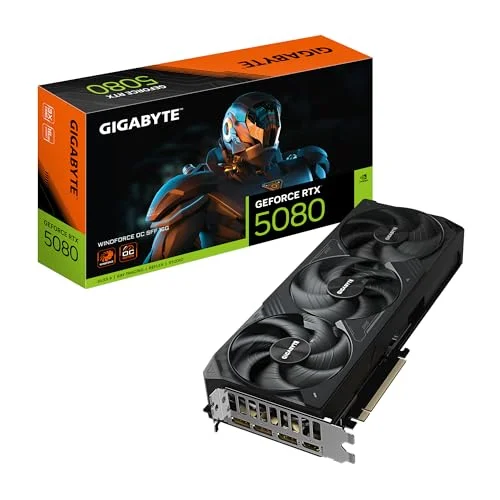
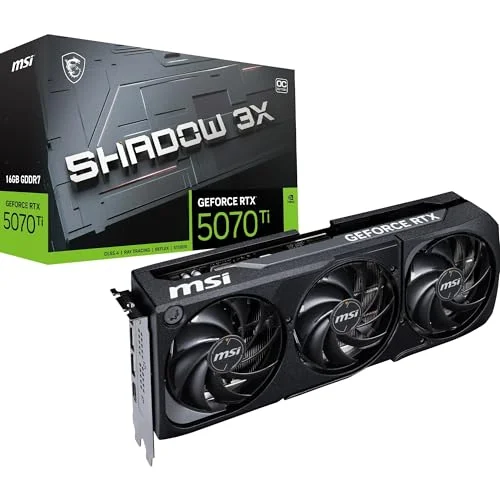
4K, or 3840 by 2160, carries four times as many pixels as 1080p and over twice as many as 1440p, which is why it punishes graphics cards so hard. A card that flies at 1440p can fall below 60 fps at 4K in the same game, and the VRAM demands climb too, which is why 16GB is the practical floor for the resolution. In our testing, of the six cards we benchmarked, only two held a smooth native 4K frame rate at ultra settings: the MSI RTX 5070 Ti at 86 fps average and the Gigabyte RTX 5080 at 104 fps. The rest are 1080p or 1440p cards that dip too far at 4K to recommend for it.
That makes 4K an expensive resolution to feed. The two cards that do it well start at around £830 and rise to £1,150, and both draw a lot of power (300 W and 360 W respectively) and need large cases and capable power supplies. If your budget cannot reach the RTX 5070 Ti, you are better off buying a strong 1440p card such as the RTX 5070 and a 1440p monitor than buying a cheaper card that struggles at 4K. There is no bargain route to good native 4K in 2026.
RTX 5070 Ti versus RTX 5080: comfortable or high-refresh 4K
The two 4K cards aim at different buyers. The RTX 5070 Ti is the value entry into 4K: at around £830 it averaged 86 fps at native 4K ultra in our suite, smooth at 60 and comfortable past that with DLSS 4, on a 16GB buffer and a 300 W draw. It is the card to buy if you want to game at 4K without paying flagship money, and it offers the best ray tracing per pound in our group. For most people stepping up to a 4K monitor, it is the sensible choice.
The RTX 5080 is the high-refresh 4K card. At around £1,150 it averaged 104 fps at native 4K ultra, the only card we tested to clear 100 fps at that resolution without upscaling, with the best ray tracing and DLSS 4 performance of the group. The trade-off is cost and power: it draws 360 W, needs an 850 W power supply and a full tower for its 340 mm body, and costs around £320 more than the 5070 Ti. So the decision is simple: buy the RTX 5070 Ti for comfortable native 4K at sensible money, and step up to the RTX 5080 only if you specifically want maxed-out, high-refresh 4K with ray tracing and have the build to support it.
Native 4K and where DLSS 4 fits in
Both cards we recommend perform well at native 4K, which is the right way to buy: treat upscaling as headroom, not a crutch. The RTX 5080 holds native 4K ultra above 100 fps in most of our games, and the RTX 5070 Ti above 60 fps, so neither relies on upscaling to be playable. Turn on DLSS 4 with frame generation, however, and both clear 120 fps comfortably at 4K, which transforms the experience on a 4K 120Hz or 144Hz monitor and makes the heaviest ray-traced games smooth. DLSS 4 is genuinely impressive on this generation and image quality is excellent, but we still recommend buying a card that performs well at native 4K first, so that upscaling extends a good experience rather than rescuing a poor one.
On VRAM, both cards carry 16GB, which is the practical floor for 4K and enough for ultra textures in current games. We would not buy a 12GB card such as the standard RTX 5070 for serious 4K work, as texture-heavy titles can exhaust that buffer at the higher resolution and cause stutter. For 4K, 16GB is the number to insist on.